

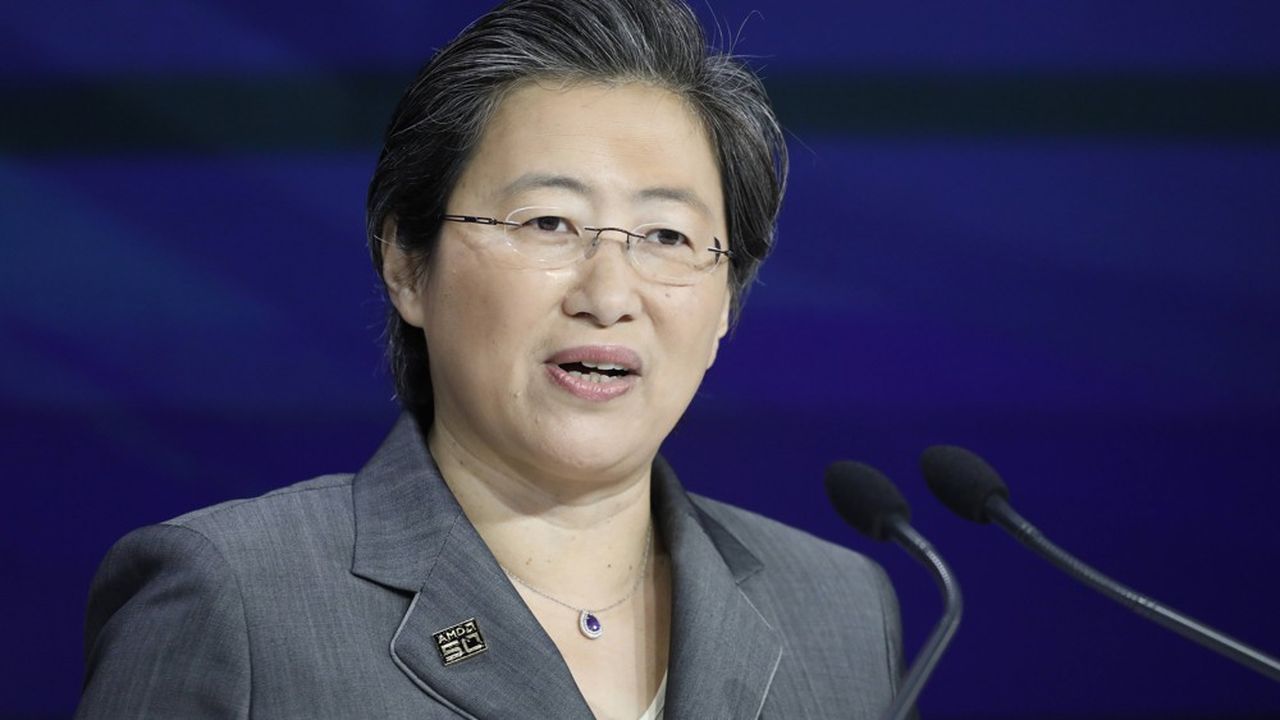
Lisa Su Becomes First Woman to Top US CEO Pay Ranking
Lisa Su, chief executive of Advanced Micro Devices, has become the first woman to lead an annual ranking of the highest-paid chief executives in the S&P 500. The milestone was confirmed by the latest survey of CEO compensation, which placed her at the top of a list historically dominated by men. Her 2019 pay package totaled $58.5 million, roughly four times what she earned in the previous year.
The scale of the award was driven less by salary than by equity. About $53 million of Su's compensation came from a one-time grant of performance-based stock. Her fixed salary was $1 million, her cash bonus was $1.2 million, and stock options accounted for $3 million. The structure reflects a broader trend in executive pay: boards increasingly tie large awards to long-term share-price and operational targets rather than to base pay.
Key facts at a glance
- Lisa Su is the first woman to top the annual ranking of the highest-paid CEOs in the S&P 500.
- She has served as chief executive of Advanced Micro Devices since 2014.
- Her 2019 compensation was $58.5 million, about four times her prior-year pay.
- Most of the package—$53 million—came from a one-time performance stock award.
- Her base salary was $1 million, her bonus was $1.2 million, and her stock options were worth $3 million.
- Born in Taiwan, she previously worked at Texas Instruments and IBM.
- She is credited with leading AMD's revival after a difficult period for the company.
Su's rise to the top of the pay table is notable not only because of the sum involved but because of the career path behind it. Born in Taiwan, she moved to the United States as a child and later studied electrical engineering at the Massachusetts Institute of Technology, where she earned bachelor's, master's and doctoral degrees. Before joining AMD, she worked at Texas Instruments and IBM, building a reputation as a semiconductor engineer and executive with deep technical knowledge.
She joined AMD in 2012 and became chief executive in 2014. At the time, the company was under severe pressure. The market for consumer personal computers had weakened sharply at the start of the 2010s, and AMD had not been prepared for the collapse in sales that followed. Its product lineup was struggling against larger rivals, its finances were strained, and its future in high-performance computing was uncertain. Su inherited a company that needed both a strategic reset and a credibility repair job with customers and investors.
Her response focused on the areas where AMD could compete most effectively: high-performance processors for personal computers, server chips for data centers, and semi-custom chips for games consoles and other embedded applications. Under her leadership, AMD rebuilt its product roadmap around new architectures and advanced manufacturing processes. The company launched new generations of central processing units that improved performance and energy efficiency, and it pushed into the server market with processors designed to challenge the incumbent supplier. Those moves helped AMD regain market share and improve its financial position.
The turnaround became one of the most closely watched stories in the semiconductor industry. AMD had long been the smaller challenger in a market dominated by larger players, and its recovery required heavy investment in research and development while keeping costs under control. Su's engineering background gave her credibility with technical teams, while her experience at larger companies helped her manage suppliers, customers and investors. The company's improved products and stronger balance sheet gradually changed the narrative from survival to competition.
By 2019, the year covered by the pay ranking, AMD was in a very different position from the one Su had inherited. Its shares had risen sharply as investors bet on its new products and on the growth of data-center computing. The one-time performance stock award that dominated her compensation was tied to those kinds of long-term outcomes. In that sense, the headline figure of $58.5 million was not a simple salary increase. It was largely a deferred, performance-linked reward that reflected the board's assessment of how far the company had come.
Executive pay at the largest US companies has long attracted scrutiny, especially when the numbers are large relative to ordinary workers' earnings. Supporters of equity-heavy packages argue that they align managers with shareholders and reward results rather than tenure. Critics argue that the figures can be inflated by stock-price movements, that performance targets can be too easy to meet, and that very high pay can widen gaps inside companies. Su's package illustrates both sides of the debate: it was enormous by ordinary standards, but most of it depended on stock performance and was not paid as cash salary.
The gender dimension of the ranking is also significant. Women remain a minority among chief executives of large US companies, and the highest-paid list has historically been almost entirely male. For a woman to reach the top of that list is therefore a symbolic marker, even if the ranking measures pay rather than influence or managerial quality. It shows that a woman can occupy the most expensive seat at the table in corporate America, and it draws attention to the small number of women who have reached the chief executive role in the largest companies.
Su's background adds another layer to the story. She is an immigrant from Taiwan who built a career in a technically demanding industry. In a sector where leadership often comes from finance, law or general management, she is an engineer by training and a product specialist by experience. Her profile has made her a prominent example of how technical expertise can translate into top-level corporate leadership. It has also made her a visible figure for people from underrepresented backgrounds in science, technology, engineering and mathematics.
The pay ranking is recalculated every year, so Su's position at the top may not last. CEO compensation can swing sharply with stock awards, performance targets and changes in company results. A single large equity grant can lift an executive to the top of the list in one year and leave them further down the next. That volatility is part of why the ranking attracts attention: it offers a snapshot of how boards reward chief executives at a particular moment, not a permanent hierarchy of corporate power.
For AMD, the award came after a period in which the company had to prove that it could compete at the highest level of semiconductor design. For Su, it marked a public recognition of a turnaround that had been years in the making. The $58.5 million figure was the headline, but the more important detail was the structure behind it: a modest base salary, a cash bonus, stock options and a very large one-time equity award tied to performance. That mix placed her at the center of the debate over how top executives are paid and what those payments say about the companies they run.
Her milestone also arrives at a time when investors and regulators are paying closer attention to boardroom diversity and to the relationship between pay and long-term value creation. Companies are under pressure to explain not only how much their chief executives earn but why the awards are structured as they are. Su's case offers a clear example of the performance logic that boards often cite: the largest part of her compensation was linked to stock and to results, and it came after a turnaround that had already changed AMD's standing in its industry.
The ranking itself compares reported pay for chief executives across the S&P 500, using figures that include salary, bonuses, stock awards and options. Because the totals depend heavily on accounting valuations and grant timing, the list can look different from year to year even when the underlying executives do not change. That makes firsts on the list notable but also temporary. Still, the fact that a woman has now topped it is a measurable shift in a measure that has long been dominated by men, and it places Su alongside the small group of executives whose pay has become a reference point in the wider debate over corporate rewards.
Source: Les Echos News