

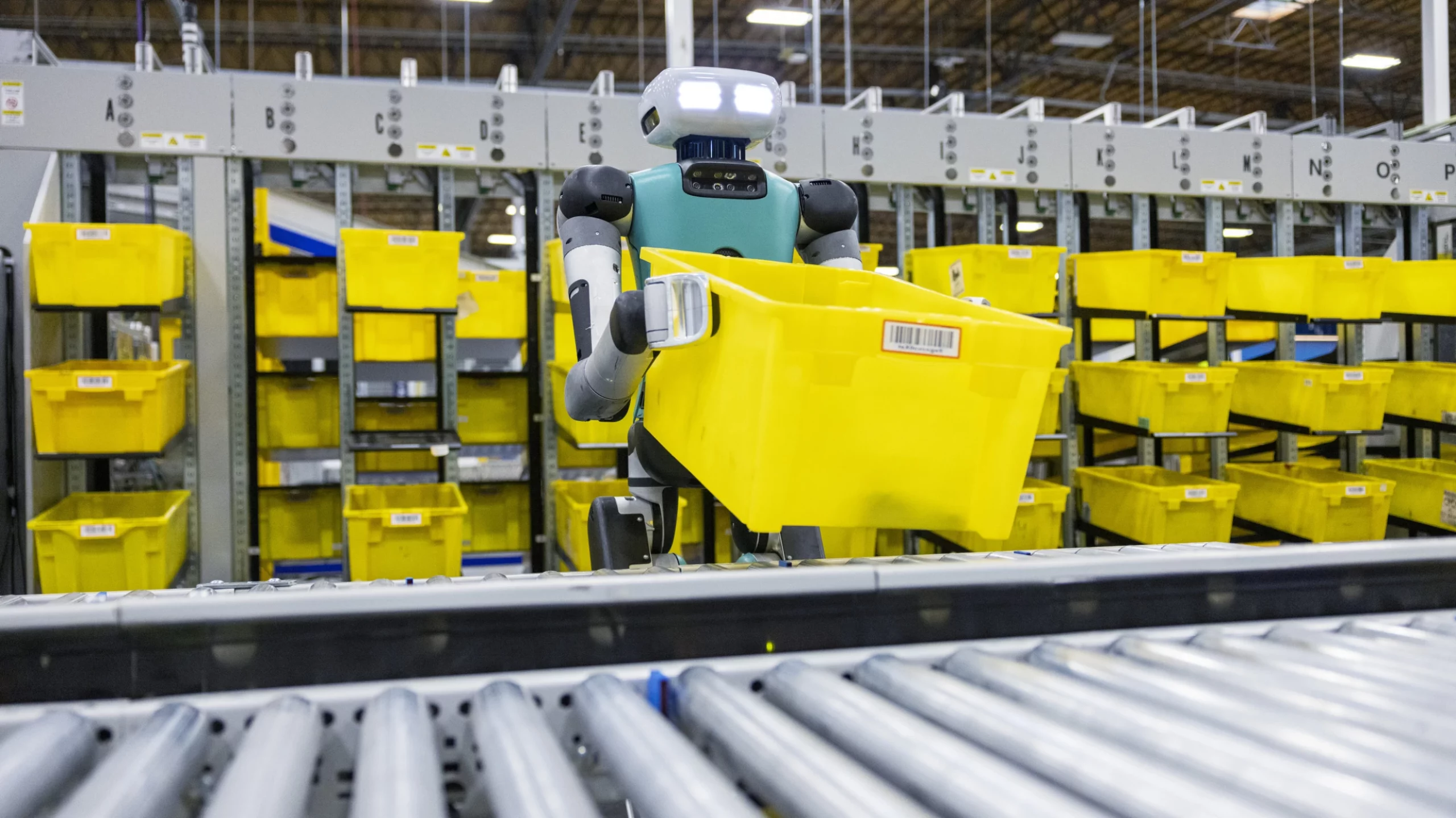
Amazon attracted approximately $126 billion (£94 billion) in peak demand for its latest bond sale on Tuesday, according to market reports. The offering ranks among the largest ever for a corporate debt issuance, highlighting sustained investor appetite for high-grade bonds from major technology companies even as broader economic conditions remain turbulent.
The e-commerce and cloud computing giant plans to offer up to 11 tranches on the US high-grade debt market, with maturities ranging from two to 50 years. Additionally, Amazon is marketing an eight-part euro-denominated bond sale this week. This dual-currency approach allows the company to tap into diverse investor bases and manage its financing costs effectively.
Amazon's latest debt raise comes just months after it issued $15 billion in bonds in November 2023—its first US bond sale in three years. The company joins a wave of tech firms turning to debt markets to fund aggressive capital expenditure on artificial intelligence infrastructure. Oracle drew $129 billion in orders for a bond sale in February, while Meta secured $125 billion in demand for its October 2023 offering. Google parent Alphabet raised over $30 billion across dollar, sterling, and Swiss franc-denominated debt last month alone.
The Scale of Amazon's AI Investment
Amazon shares fell in February after the company announced plans to invest approximately $200 billion in capital expenditures this year, with the majority directed toward AI infrastructure. This figure surpasses the spending plans of competitors Google and Microsoft, underscoring Amazon's determination to lead in the AI space. Chief Executive Andy Jassy defended the outlay on a recent investor call, stating, "We're going to invest to be the leader in this space." He highlighted investments in custom AI chips, robotics, and low Earth orbit satellites as key areas of focus.
The spending spree reflects a broader industry trend where tech giants are pouring billions into building data centers, acquiring specialized hardware, and developing proprietary AI models. These investments are essential for maintaining competitive advantage in cloud computing, generative AI, and enterprise software. However, they also carry significant risk, as returns on such massive outlays remain uncertain. Investors are increasingly demanding clearer pathways to profitability from these AI ventures, creating tension between long-term strategic goals and short-term financial performance.
Market Context and Investor Sentiment
The strong demand for Amazon's bonds—exceeding $126 billion in orders—signals that investors remain confident in the company's creditworthiness and growth prospects, despite the hefty spending. Amazon holds an A1 rating from Moody's and an AA- from S&P, reflecting its robust cash flow and dominant market positions in e-commerce, cloud computing (AWS), and digital advertising. The bond sale allows Amazon to lock in relatively low interest rates while diversifying its funding sources away from internal cash reserves.
Tech companies have historically relied on internal cash flows to fund capital expenditures, but the scale of AI investment has pushed many to seek external financing. The debt market offers a flexible and cost-effective way to raise large sums without diluting equity. For institutional investors, high-grade tech bonds provide a safe haven with attractive yields, especially in an environment where interest rates remain elevated and economic uncertainty persists.
Amazon's bond sale also comes at a time when the broader corporate bond market is experiencing robust activity. According to data from the Securities Industry and Financial Markets Association, US investment-grade bond issuance reached a record $1.4 trillion in the first quarter of 2025, driven largely by technology companies. This trend reflects both the insatiable demand for AI infrastructure and the willingness of investors to finance it.
Amazon's AI Strategy and Competitive Dynamics
Amazon's AI strategy encompasses multiple layers: custom silicon development, robotics for fulfillment centers, satellite-based internet (Project Kuiper), and deep integration of AI into AWS services. The company's custom Trainium and Inferentia chips are designed to train and deploy AI models more efficiently than off-the-shelf alternatives, potentially reducing costs and improving performance. In robotics, Amazon has deployed over 750,000 robots across its global logistics network, with AI-driven systems optimizing warehouse operations and last-mile delivery.
Project Kuiper, Amazon's low Earth orbit satellite constellation, aims to provide global broadband internet access. Although still in its early stages, the project leverages AI for network management and user allocation. The satellite initiative competes directly with SpaceX's Starlink and requires substantial upfront capital investment, adding to Amazon's overall capex burden.
On the cloud front, AWS is enhancing its AI offerings through services like Amazon Bedrock, which provides access to multiple foundation models, and Amazon SageMaker, which simplifies machine learning workflows. The company also recently launched Amazon Q, a generative AI assistant for businesses. These tools are designed to capture enterprise AI workloads and drive continued growth in AWS revenue, which remains Amazon's primary profit engine.
However, competition in AI is intensifying. Microsoft has strengthened its partnership with OpenAI and integrated AI across its Azure cloud and Office 365 products. Google is leveraging its own Gemini models and Tensor Processing Units (TPUs) to power its cloud and consumer services. All three tech titans are engaged in an arms race for AI talent, compute capacity, and proprietary data.
Risks and Challenges
Despite the strong bond demand, Amazon faces several risks. The enormous capital expenditure could pressure profit margins and free cash flow in the near term. In February, Amazon reported that its capital expenditures had increased by 50% year-over-year, while operating income in some segments remained under pressure. Investors are closely watching metrics like return on invested capital (ROIC) to assess whether these investments will pay off.
Regulatory scrutiny is another concern. Antitrust authorities in the US and Europe are increasingly examining Amazon's market power, particularly in cloud computing and e-commerce. Tough competition laws could limit Amazon's ability to leverage its ecosystem for AI dominance. Additionally, potential export controls on advanced chips and AI technology could disrupt Amazon's supply chain and increase costs.
The macroeconomic environment also poses challenges. While the bond market remains favorable, persistent inflation and interest rate uncertainty could affect Amazon's borrowing costs. If the Federal Reserve maintains high rates for longer, Amazon's debt servicing costs will rise, potentially reducing net income.
Nevertheless, Amazon's ability to attract over $126 billion in orders for a single bond sale demonstrates the confidence investors have in the company's long-term vision. With AWS generating stable cash flows and Amazon's core retail business recovering from post-pandemic slowdowns, the company is well-positioned to weather short-term volatility. The key question is whether the AI investments will generate the transformative returns that justify the hundreds of billions being spent.
As Andy Jassy emphasized, Amazon intends to be the leader in AI. This bond sale provides the financial fuel to pursue that ambition, but the ultimate verdict will depend on execution, innovation, and market demand for AI-driven solutions.
Source: Silicon UK News