

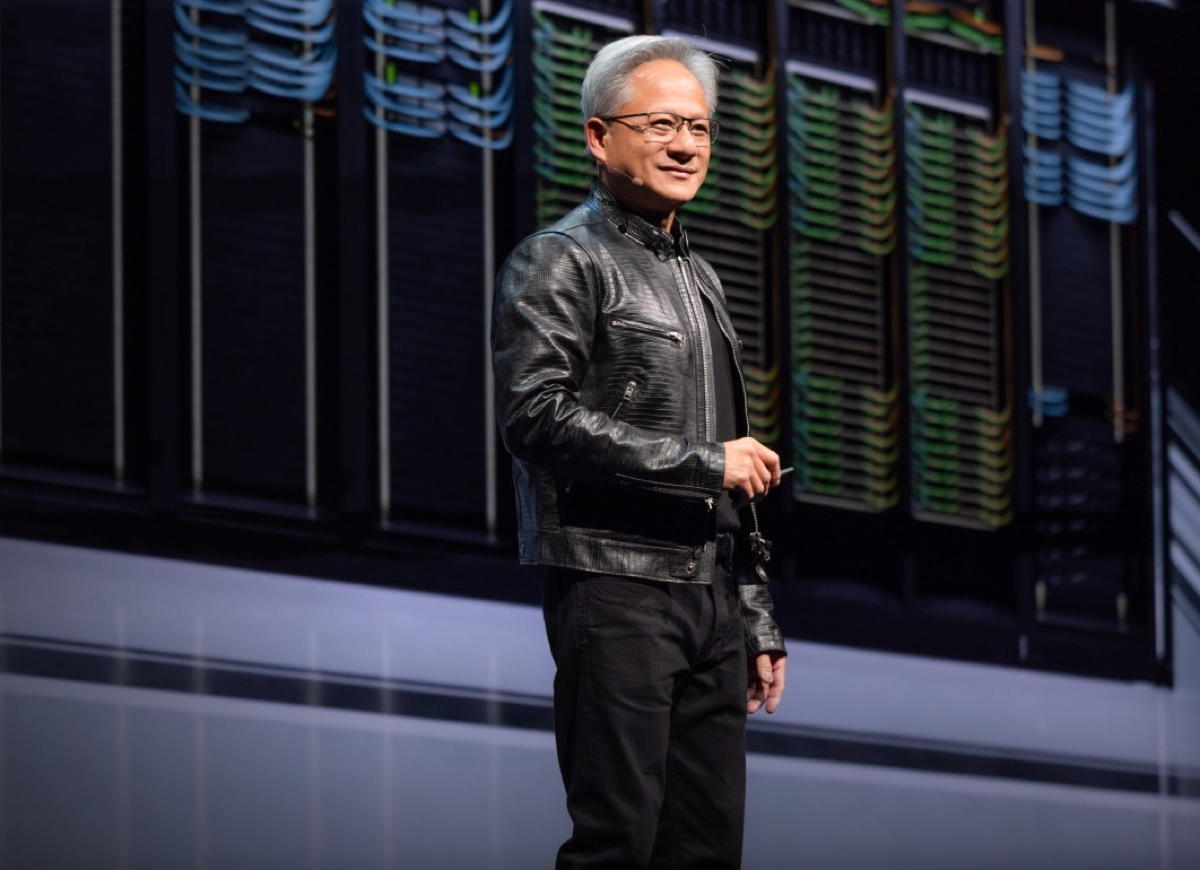
Nvidia chief executive Jensen Huang said the company will “probably” not invest $100 billion (£75bn) in OpenAI, following a much smaller $30bn investment as part of a funding round last week, giving the reason as the AI start-up’s likely IPO sometime this year.
“I think the opportunity to invest $100 billion in OpenAI is probably not in the cards,” Huang said during a conference hosted by Morgan Stanley. He added that because of the expected IPO, “this might be the last time we’ll have the opportunity to invest in a consequential company like this.”
Huang’s comments come after months of speculation surrounding the relationship between Nvidia and OpenAI, the two most prominent leaders in the generative AI boom that has swept the world. In September, Nvidia announced plans to invest up to $100bn into OpenAI over several years, with rounds tied to the startup’s successive deployments of Nvidia’s chips in data centers. However, the agreement was never finalised, and by January reports indicated it had stalled.
The initial announcement spurred confidence across the tech sector, driving up stock prices and encouraging other firms to announce similar large-scale deals. But the economics of the AI boom have since shifted. Last year’s optimistic projections have given way to the stark realities of building and operating massive data centres required to power advanced AI models.
These facilities consume enormous amounts of electricity, water, and other natural resources, often drawing backlash from local communities and environmental groups. In regions where data centres are being constructed, residents have raised concerns about rising utility costs, strain on water supplies, and the environmental footprint of these energy-intensive operations. Nvidia, as the dominant supplier of graphics processing units (GPUs) used for AI training and inference, is at the centre of this debate.
The Changing Landscape of AI Investments
The relationship between Nvidia and OpenAI has been closely watched since the launch of ChatGPT in late 2022, which sparked a frenzy of investment in generative AI. OpenAI, initially a non-profit research lab, transitioned to a capped-profit model and has raised billions from Microsoft and other investors. Nvidia, meanwhile, saw its market capitalisation soar past $1 trillion as demand for its chips skyrocketed.
In addition to the OpenAI situation, Huang also addressed Nvidia’s recent $10bn investment in Anthropic, another leading AI company. He described that investment as probably “the last” opportunity to invest in Anthropic before its own expected IPO. Anthropic, founded by former OpenAI employees, has focused on building safer AI systems and has attracted significant funding from various sources.
Industry analysts have noted that the shift from announced investments to actual capital deployment has been slower than expected. Many deals that were hyped in the media have failed to materialise, partly due to regulatory hurdles and the immense logistical challenges of scaling AI infrastructure. The collapse of the original $100bn plan between Nvidia and OpenAI underscores the volatility of the sector.
Background on Jensen Huang and Nvidia’s Role
Jensen Huang co-founded Nvidia in 1993 and has served as its CEO ever since. Under his leadership, the company evolved from a maker of graphics cards for gaming into a powerhouse in parallel computing, deep learning, and artificial intelligence. Huang is often credited with foreseeing the potential of GPUs for non-graphical applications, particularly in scientific computing and AI.
Nvidia’s CUDA platform, introduced in 2006, allowed developers to harness the power of GPUs for general-purpose processing, which became the foundation of modern AI training. Today, Nvidia’s chips are used by almost every major AI lab, including OpenAI, Google DeepMind, Meta AI, and hundreds of startups. The company’s data centre revenue has grown exponentially, reaching $14.51 billion in the most recent quarter, a 206% increase year-over-year.
Huang’s public statements are closely followed by investors and tech enthusiasts. His remarks at the Morgan Stanley conference were part of a broader discussion about the future of AI, semiconductor supply chains, and the company’s long-term strategy. He emphasised that Nvidia’s core business remains focused on building the platforms that enable AI development, rather than becoming a major equity investor in individual AI companies.
The Economics of AI Data Centres
The escalating costs of building and operating AI data centres have become a central concern. A single hyperscale data centre can require hundreds of megawatts of electricity, and the demand for AI-specific hardware like Nvidia’s H100 and upcoming B100 GPUs has led to a global shortage of these components.
Power constraints are particularly acute in regions like Northern Virginia, which hosts the largest concentration of data centres in the world. Local utilities have struggled to keep up with demand, leading to delays in new construction and potential rate increases for residential customers. Water usage is another flashpoint: many data centres use evaporative cooling systems that consume millions of gallons per day, often in areas facing drought conditions.
Environmental groups have filed lawsuits against several proposed data centre projects, and some local governments have imposed moratoriums on new developments until their long-term impact can be assessed. These challenges are forcing AI companies and hardware vendors to explore alternative cooling technologies, renewable energy sources, and more efficient chip designs.
Nvidia has responded by developing power-efficient architectures and liquid cooling solutions, but the scale of the problem remains daunting. The company’s next-generation Blackwell architecture, announced in March 2024, promises significant performance gains per watt, but deployment is still months away.
Regulatory and Geopolitical Factors
Beyond economic and environmental factors, AI investments are also shaped by geopolitical tensions. The U.S. government has imposed export controls on advanced semiconductors to China, limiting Nvidia’s sales of its highest-performing chips to that market. This has forced the company to develop lower-performance variants for China, reducing revenue potential from the world’s second-largest economy.
Meanwhile, the European Union is drafting strict regulations on AI, including requirements for transparency and risk assessment, which could increase compliance costs for companies like OpenAI and Anthropic. The proposed EU AI Act is expected to come into force later this year, with potential fines of up to 7% of global annual turnover for serious violations.
These regulatory uncertainties add another layer of complexity to large-scale investment decisions. Investors and corporate leaders are increasingly cautious about committing billions of dollars to companies whose business models may be disrupted by new laws.
What This Means for the AI Industry
Huang’s comments signal a maturation of the AI investment landscape. The era of easy money and unlimited hype is giving way to a more grounded assessment of what is achievable. While generative AI continues to attract enormous interest, the path to profitability is proving longer and more capital-intensive than many anticipated.
OpenAI, which is reportedly seeking a valuation of over $100 billion in its next funding round, faces intense competition from open-source models and from deep-pocketed rivals like Google and Meta. The company’s reliance on Nvidia hardware, combined with its own push to develop custom AI chips, creates a complex dynamic between the two firms.
Anthropic, meanwhile, has positioned itself as the safer alternative, but it too requires massive compute resources to train and deploy its models. Its $10bn investment from Nvidia was seen as a strategic move to secure chip supply and align interests, but Huang’s comments suggest that this may be a one-time arrangement.
For other startups in the AI space, the message is clear: large-scale corporate investments are not guaranteed, and IPOs may come sooner than expected. The window for private investment in foundational AI companies is narrowing, as many of the leading players approach public markets.
Nvidia itself continues to benefit from the AI boom, but its own growth is not without risks. The company faces increasing competition from AMD, Intel, and custom chip designs from cloud providers like Amazon and Google. If the demand for AI training slows, or if alternative architectures prove more efficient, Nvidia’s dominance could erode.
Nevertheless, Huang remains optimistic about the long-term trajectory. In his conference remarks, he highlighted the potential for AI to revolutionise industries from healthcare to manufacturing, and reiterated Nvidia’s commitment to building the infrastructure that will power this transformation.
As the AI industry moves from hype to reality, the decisions made by leaders like Jensen Huang will shape its future. The decision to step back from a massive investment in OpenAI may be pragmatic, but it also reflects a broader recalibration across the tech world. Investors, regulators, and the public will be watching closely as these dynamics unfold.
Source: Silicon UK News